


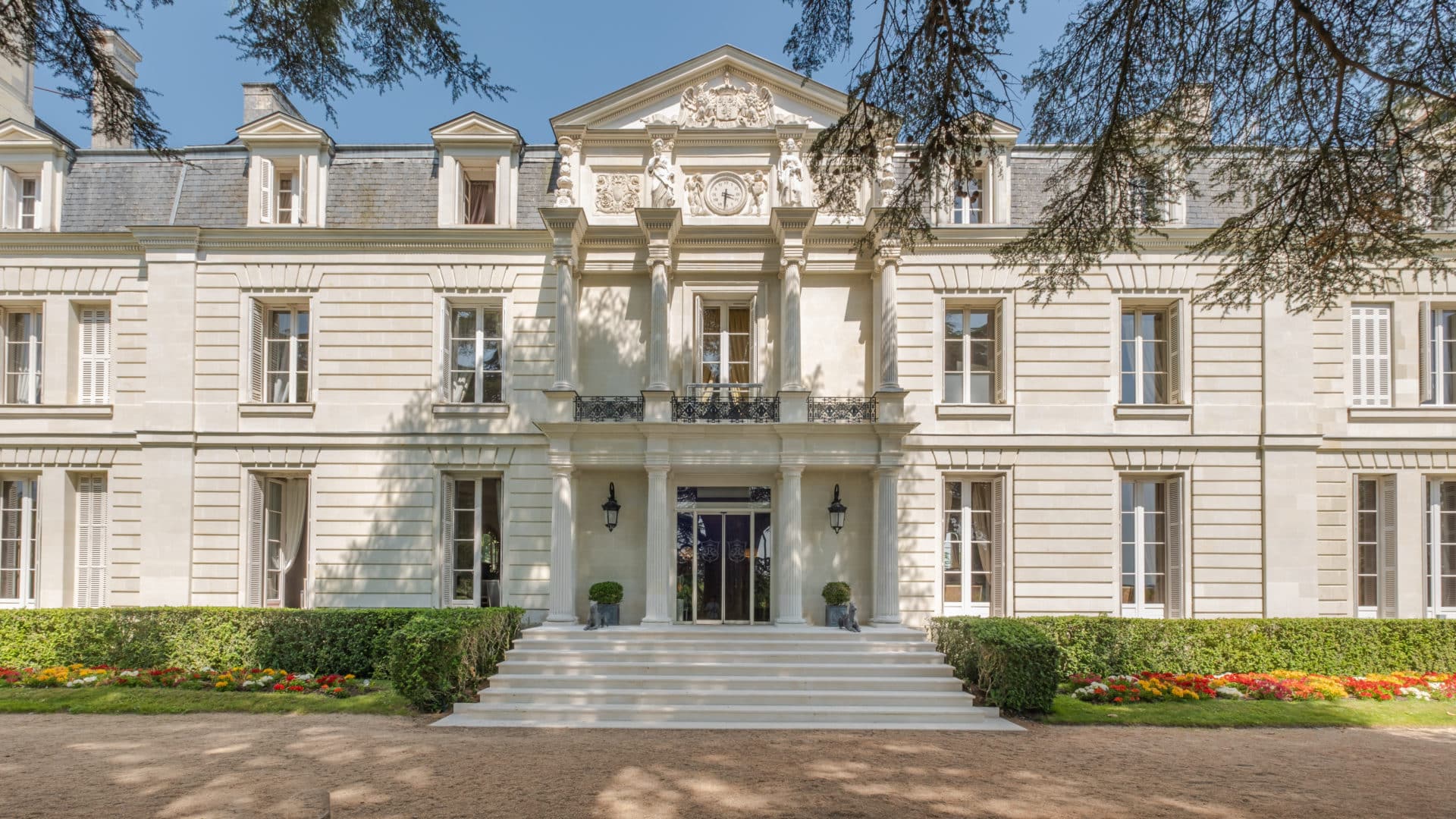
History of Château de Rochecotte
Discover the history of Château de Rochecotte, a place of life, passion and influence. Come and meet the Pasquier family, who for 3 generations have put their passion at the service of excellence to offer you unforgettable moments.
In the beginning…
During the Hundred Years’ War, Rochecotte, perched on its rocky outcrop, was a strong military outpost tasked with monitoring the advance of English troops.
In 1767, it became the property of the Guillon de Rochecotte family, who supplied the cavalry with many brave soldiers. The most famous of these was Louis Fortuné Guillon de Rochecotte.

Over time…
In 1828, the history of Château de Rochecotte continued with the purchase of the property by Duchesse Dorothée de Dino. Elle le transforme en villa Italienne avec colonnes, pergolas et parterres. All with a magnificence matched only by the profusion of flowers that adorn it. She gave the Château its current architecture.
“I have a real passion for Rochecotte; firstly, it’s mine. Secondly, it’s the most beautiful view and the most beautiful country in the world. Lastly, it’s an air that makes me live lightly, and then I arrange, I turn, I embellish, I appropriate…”.
– The Duchess of Dino
Today, the château still looks just as it did in the Duchess’s time. In the form of a long edifice with a slightly projecting central forebody topped by a pediment, flanked by two square pavilions with broken roofs, enjoying a magnificent view over the Loire Valley.
Family life at the chateau
The Duchesse de Dino was married to Count Edmond de Talleyrand Périgord at the insistence of his uncle Prince Charles Maurice de Talleyrand Périgord, and with the support of the Russian Tsar. At Rochecotte, family life is complete. The Duchesse de Dino had her three children with her: her two sons, Napoléon-Louis, 14, years old Alexandre-Edmond, 12 years old; but it was little Pauline, 5 years old, who would delight her great-uncle the Prince de Talleyrand. The Prince stays at the chateau in his apartments on the Italian terrace.
Prince Charles-Maurice de Talleyrand Périgord was born in 1754. He was a French statesman and diplomat, active during the Revolution, Empire and Restoration. Pragmatic and visionary, his relationship with the Duchesse was one of mutual admiration and trust.

Rochecotte, a place of influence…
When her parents and personal friends weren’t at the Château, Dorothée was happy to welcome men of letters, journalists and leading political figures. Honoré Balzac was received there on several occasions.
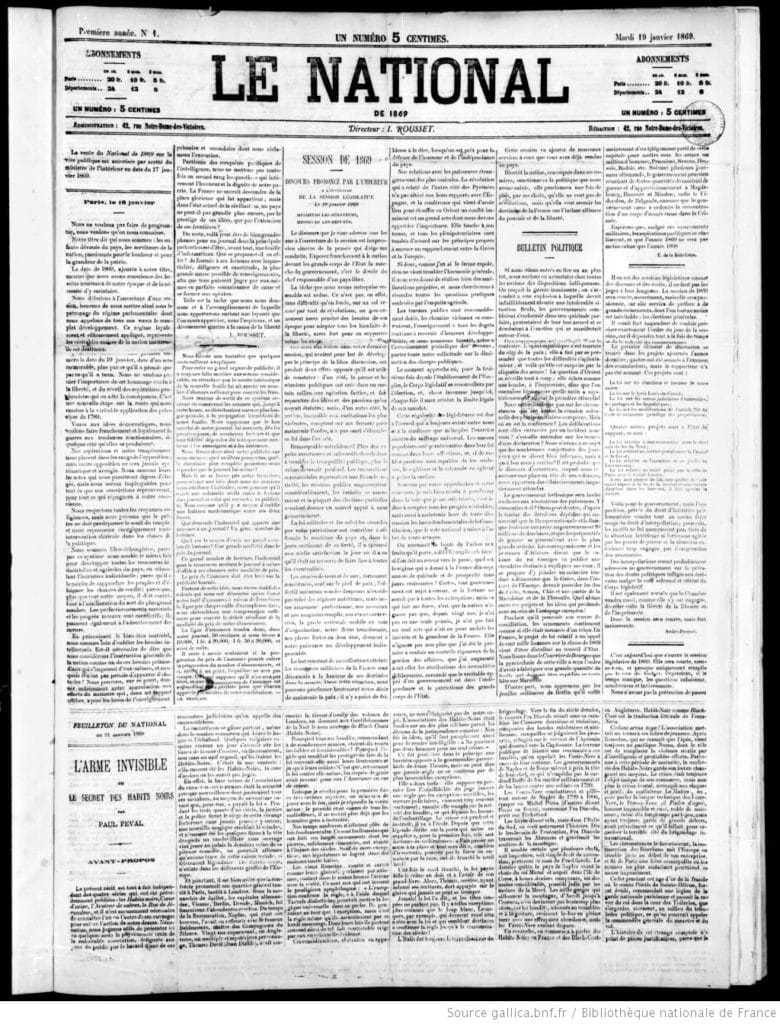
Among the politicians, Adolph Tiers was the most frequent guest. It was in Rochecotte that the decision was taken to create the new newspaper ” Le National” whose violent campaigns paved the way for the July Revolution. Talleyrand had the ability to steer them towards the advent of the younger branch, Louis Philippe.
During this period, the intervention of the Duchesse de Dino was invaluable for her constant presence, her suggestions, the prestige of her fiery beauty, her beautiful and strong intelligence, and her supple yet vehement will.
Pauline de Castellane
After Prince Talleyrand’s death, the Duchesse de Dino became Princesse de Talleyrand and acquired the principality of Sagan, a 30,000-hectare estate. She lives there almost constantly, but the memory of Rochecotte never leaves her. In her memoirs, she wrote: ” I feel deep, melancholy regret for this gentle, tranquil Rochecotte, this vast horizon, this pure sky…”. Shortly after writing these lines, she died in 1862.
In 1839, on the occasion of Pauline’s marriage to the Marquis Henri de Castellane, the Duchesse donated Château de Rochecotte to her daughter, where she spent much of her life. Pauline was very pious, and to her credit created a number of charitable works: ” She had the difficult art of honoring by helping. In Saint-Patrice, it created a railway station, a school, a church and a dispensary. On her death, the chateau passed to his son Antoine de Castellane.

In 1890, Antoine de Castellane had the castle’s royal stables built—an instinctive marker of his place among the social elite. He had four sons: Jean, Jacques (who died young), Stanislas, and the best known of them all, Boni ( Boniface), a famous dandy of the Belle Époque, married to the fabulously wealthy American Anna Gould (daughter of the pioneer and founder of the American railroads). He celebrated his wedding in Rochecotte with a lavish and memorable three-day festival. The town was adorned with flowers, barrels of wine at every crossroads, and filled with dancing and singing.

Boni de Castellane, Anna Gould and their two children

The 1930s at the château
Boni, Jean and Stanislas sold Rochecotte in 1934 to their brother-in-law, Emilio Terry Sanchez, a wealthy Cuban interior designer. Over a period of thirty-five years, Emilio Terry restored the château and decorated it in his own neoclassical and baroque style. He launched what he called the ” Louis XVII style “, furniture and architecture in an imaginary style, freely inspired by historical examples.
He restored Rochecotte to its former glory and added his own collections to the existing ones.
The Treaty of Versailles
In 1940, Rochecotte experienced a remarkable event. Fearing the German army’s entry into Paris, the French government decided to evacuate the archives of the Ministry of Foreign Affairs to various châteaux in Touraine, with the most valuable ones being sent to Rochecotte. The Germans were still searching for the Treaty of Versailles, which they saw as a symbol of the humiliation of their defeat in 1918. Due to a mistake by a ministry official, a German officer stumbled upon the bundle containing the actual Treaty of Versailles. The treaty was returned under the majestic Lebanese cedar that adorns the façade of the Château de Rochecotte.

Emilio Terry died in 1969. He bequeathed the château to Henri-Jean de Castellane, who never lived there. The château remained closed for many years, before being sold on January 16, 1978 to Marcel Joly & Compagnie. This wealthy financier was related to the Michelin family. The estate was divided up, the château emptied of its furniture and precious objects, and Dorothée’s library dispersed.

History in the present…
All the souvenirs of the Duchesse and Prince de Talleyrand were sold in various places.
The château, which had been abandoned and closed for years, was little more than a ruin when it was purchased by the Pasquier family in 1984. They restored its soul and splendor by transforming it into a charming hotel that keeps alive the memory of the Duchess of Dino de Talleyrand Périgord and the Duchess of Sagan.
The third generation has arrived, and the story is far from over. Come and write the sequel with us!
The Château todayin a few words…
- A wonderful location overlooking the Loire Valley.
- Located at the beginning of the vineyards of Saint-Nicolas-de-Bourgueil.
- A place full of history, a chapel built in memory of Prince Talleyrand.
- This is a luxury hotel with a human touch, offering personalized and attentive service.
- 37 elegantly decorated rooms, suites and apartments.
- Enjoy tea time on sunny days on the huge Italian terrace overlooking the valley and French garden.
- Outdoor heated pool open in summer.
- A 25-hectare park with walking streets and French gardens.
- Bicycles can be rented on site.
- A gastronomic restaurant with both classic and modern decor.
- An authentic gourmet restaurant, two chefs and their teams will satisfy your taste buds.
- We respect our products and focus on local, seasonal products.
- There are a number of salons available for hosting professional and private events.
- Fully equipped rooms (Wi-Fi, hospitality tray, safe, iron, air conditioner, bathrobe, etc.)
- Certification of “Maître Restaurateurs“.
- Quality Tourism Certification.
- Reception PRM (persons with reduced mobility).

The Logis de Rochecotte
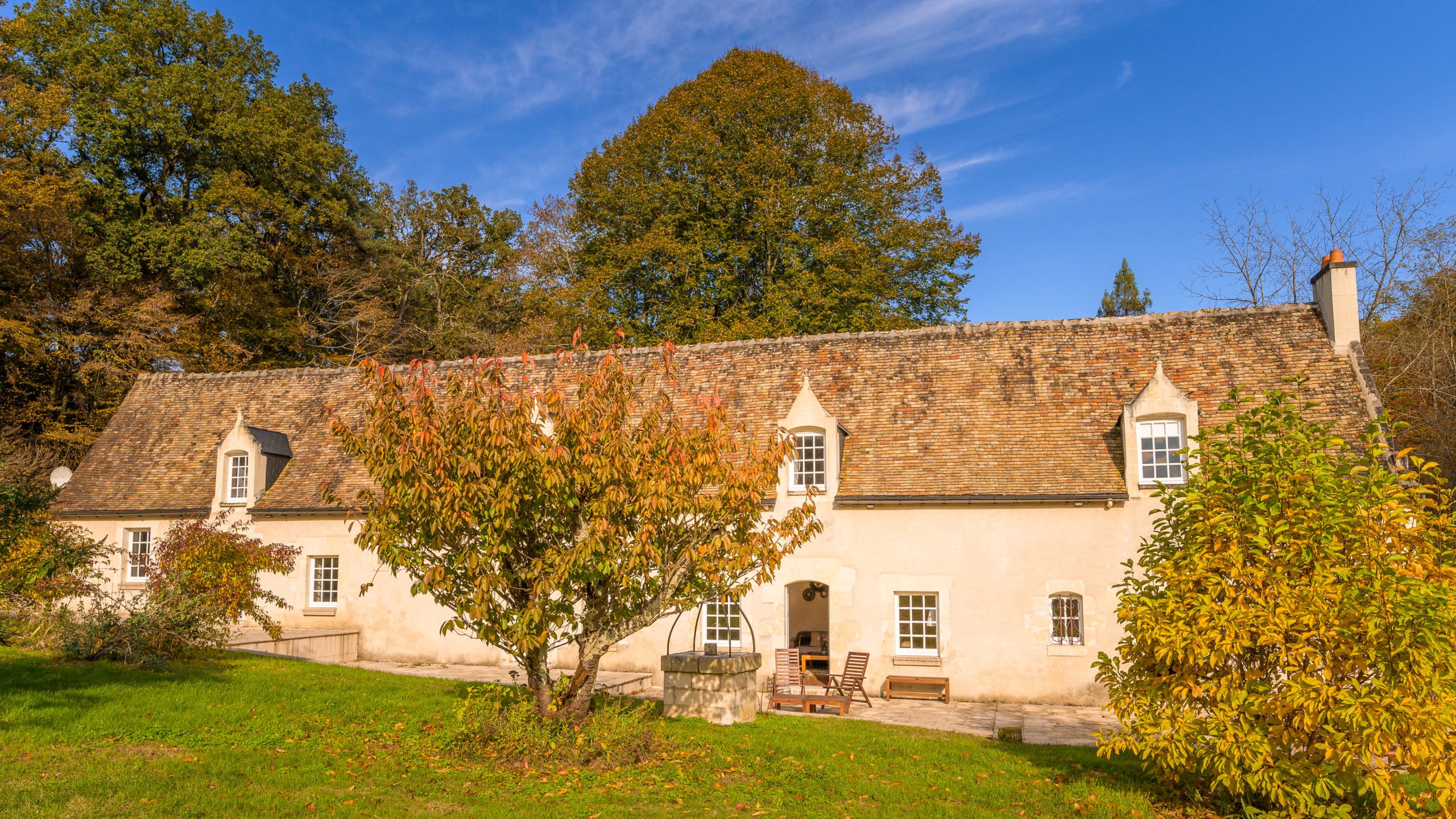
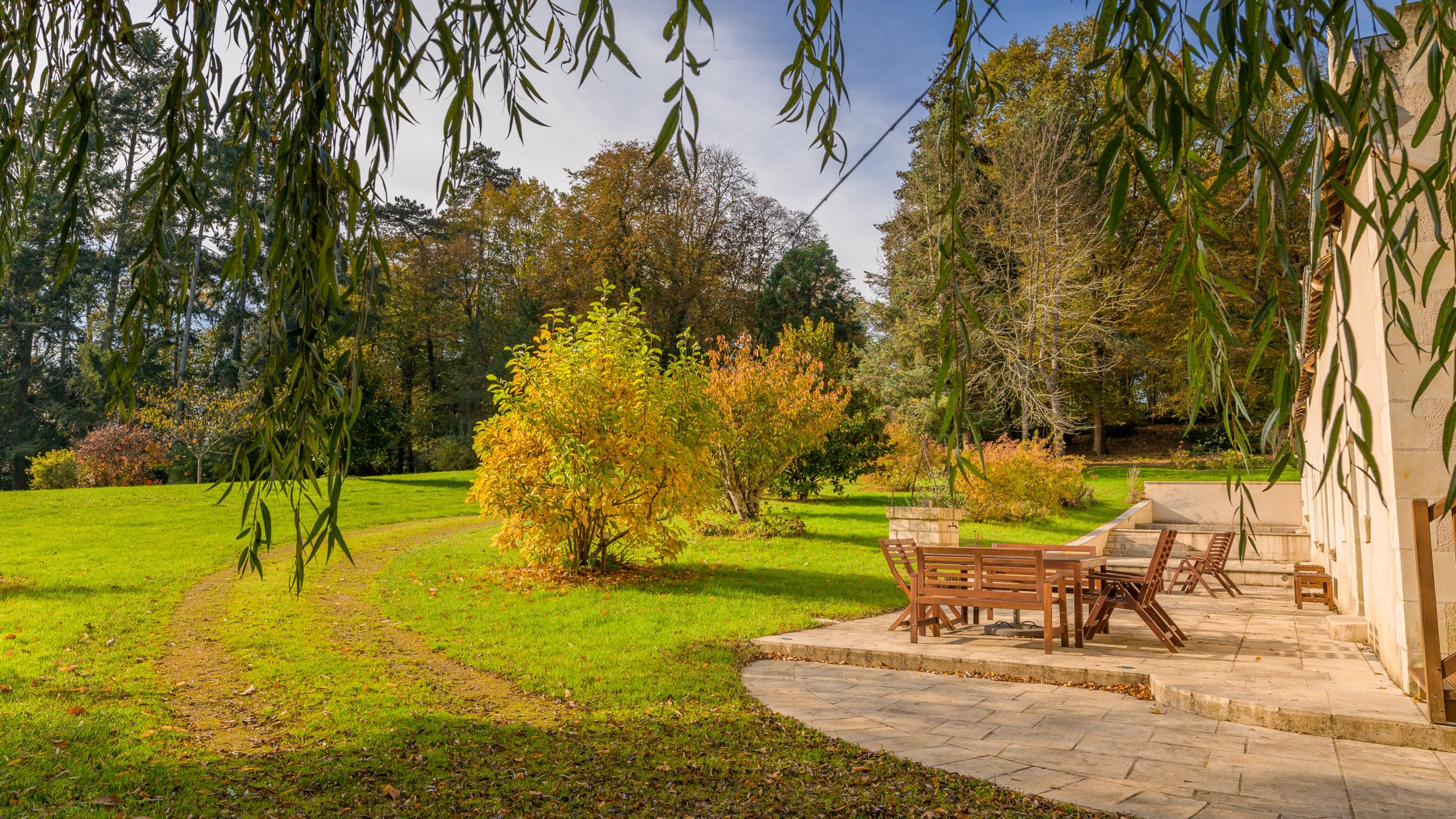
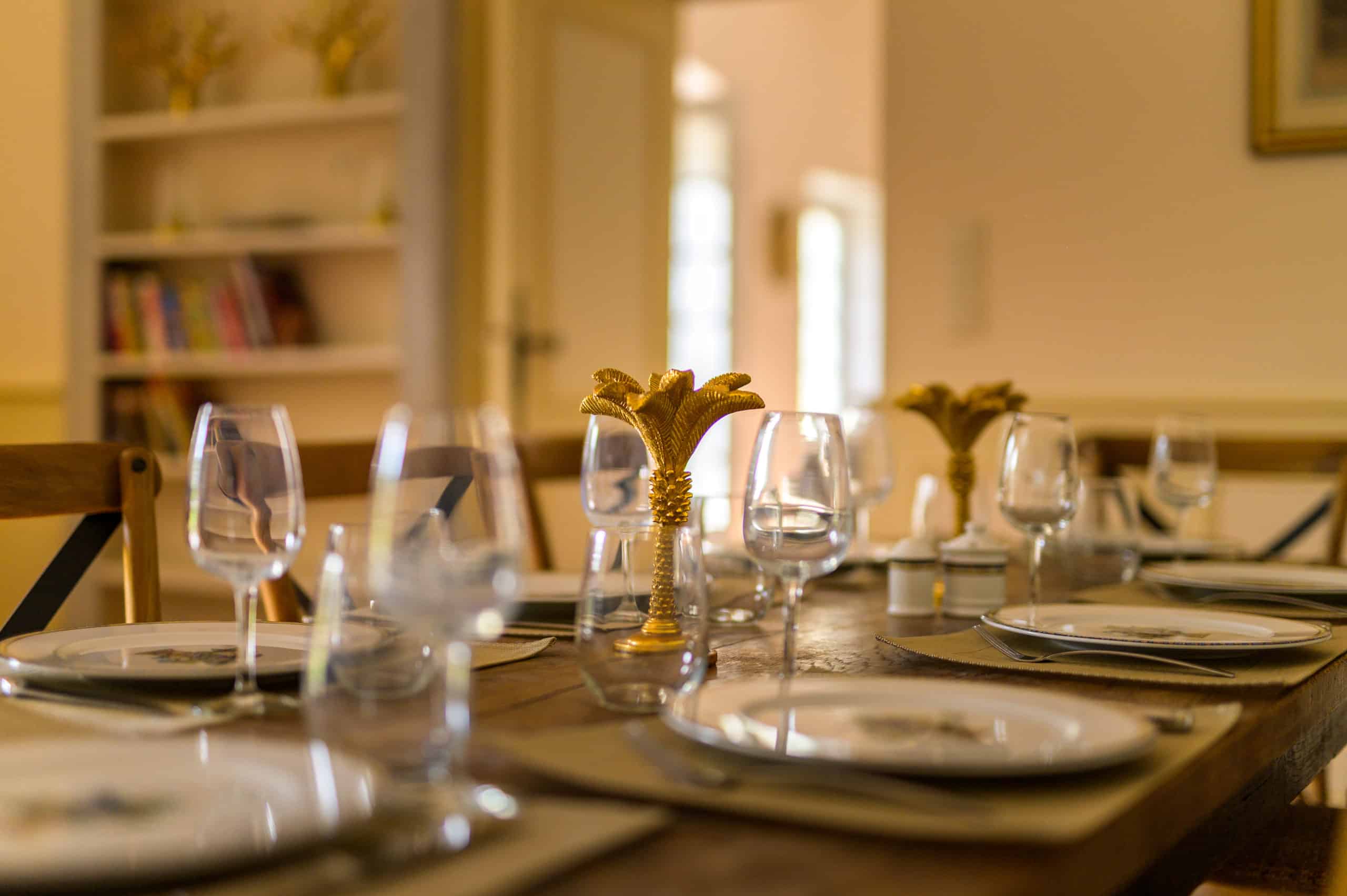
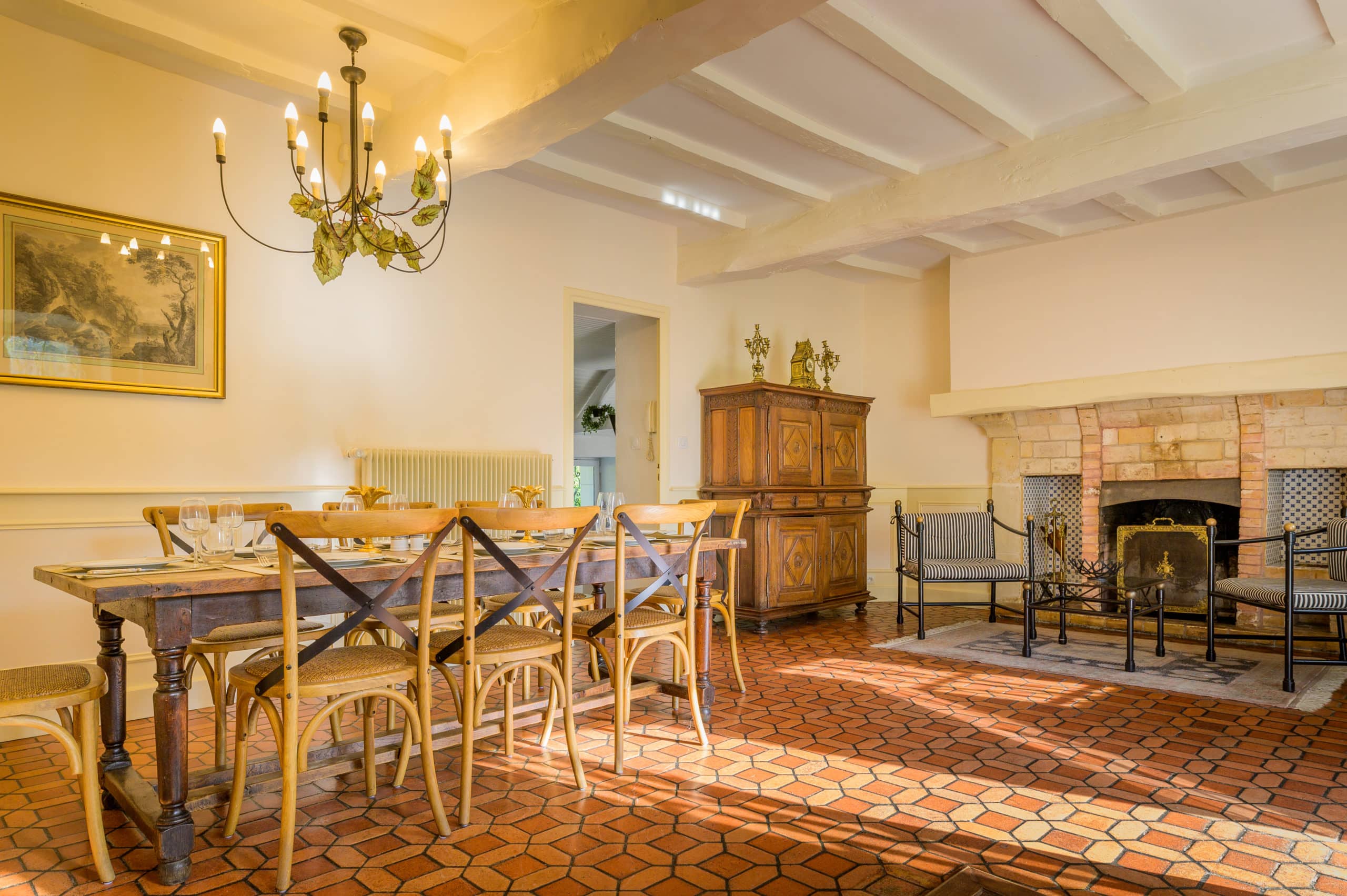
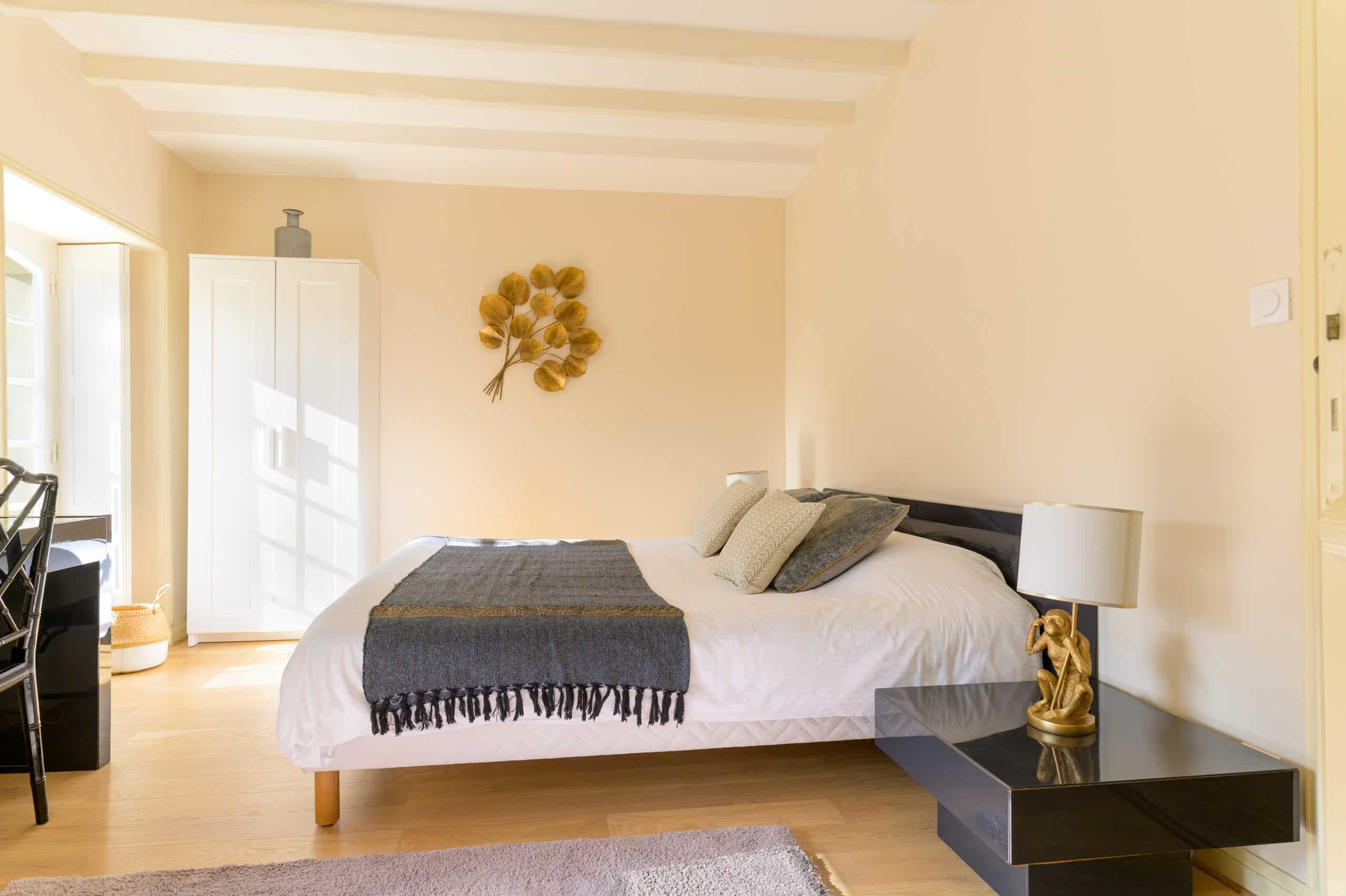
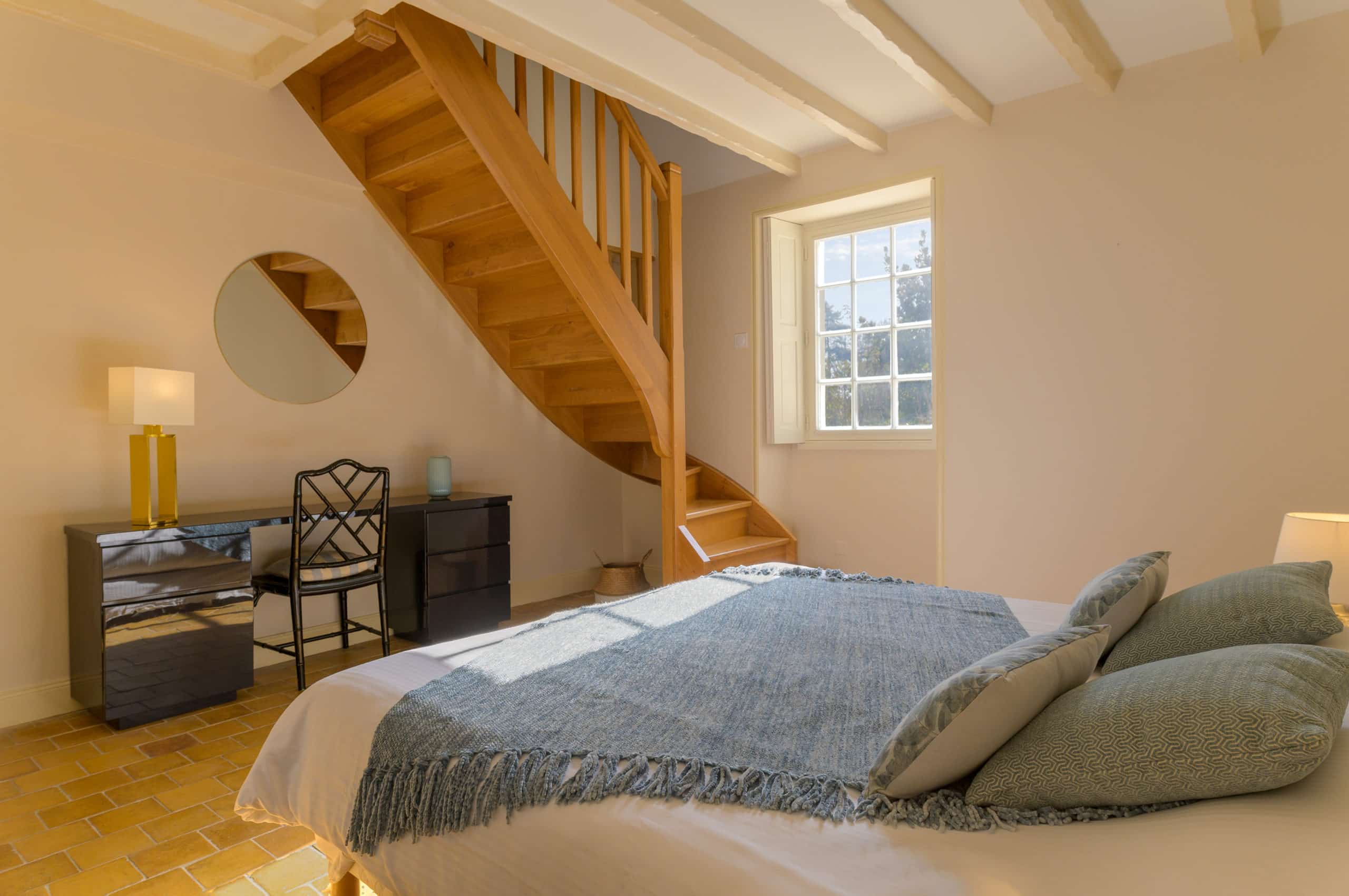
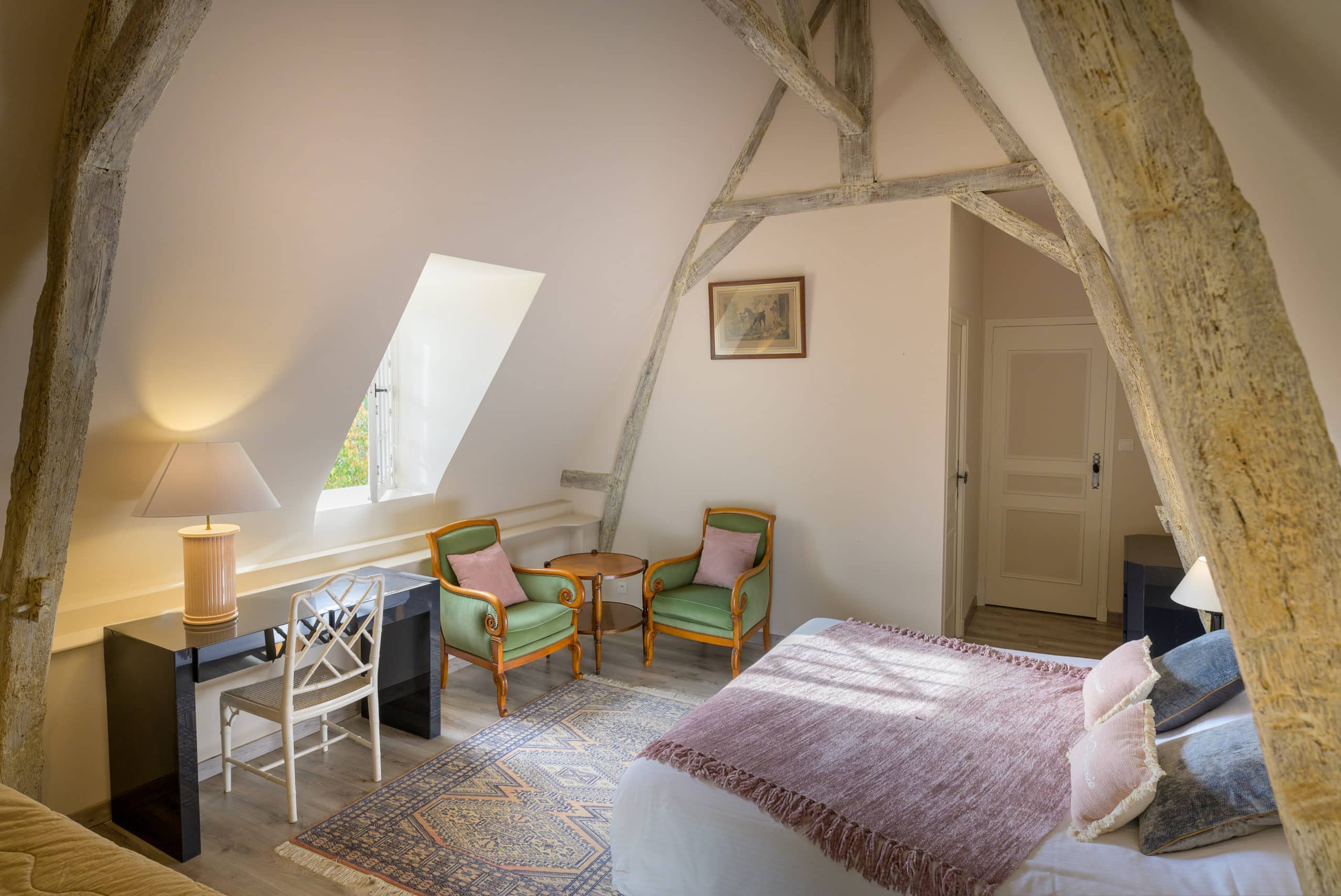
Located below our domaine, the Logis de Rochecotte* offers an intimate, rural atmosphere for up to 11 people. This newly renovated property is located in the middle of a fenced park on the edge of a vast forest, offering an enchanting respite in the lands of the Loire Castles.